
Copyright © Lumley Leadwork & Roofing 2025 | Designed by Studio Inter
Copyright © Lumley Leadwork & Roofing 2025 | Designed by Studio Inter
Overview
In 2022, we were appointed by Historic Property Restoration to investigate and resolve persistent water ingress affecting the parapet wall of the keep at Carlisle Castle. As one of the most important and robust fortifications in northern England, the castle’s keep demanded a solution that balanced performance, durability and sensitivity to the historic fabric. The parapet wall forms a critical junction between the exterior defences and the interior stone roof. Ongoing water penetration posed a long-term risk to the structure below, requiring a carefully considered conservation approach.
Results
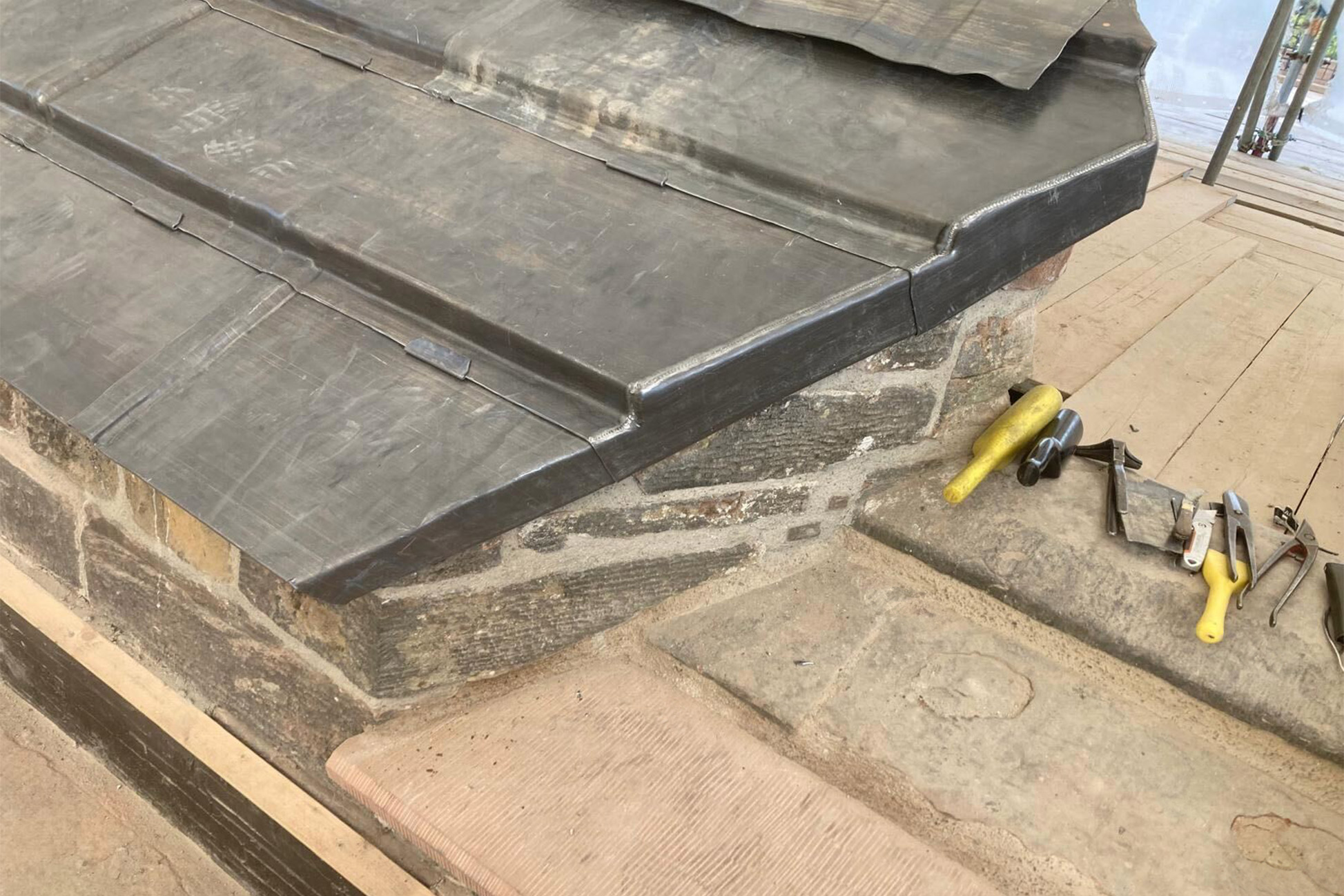
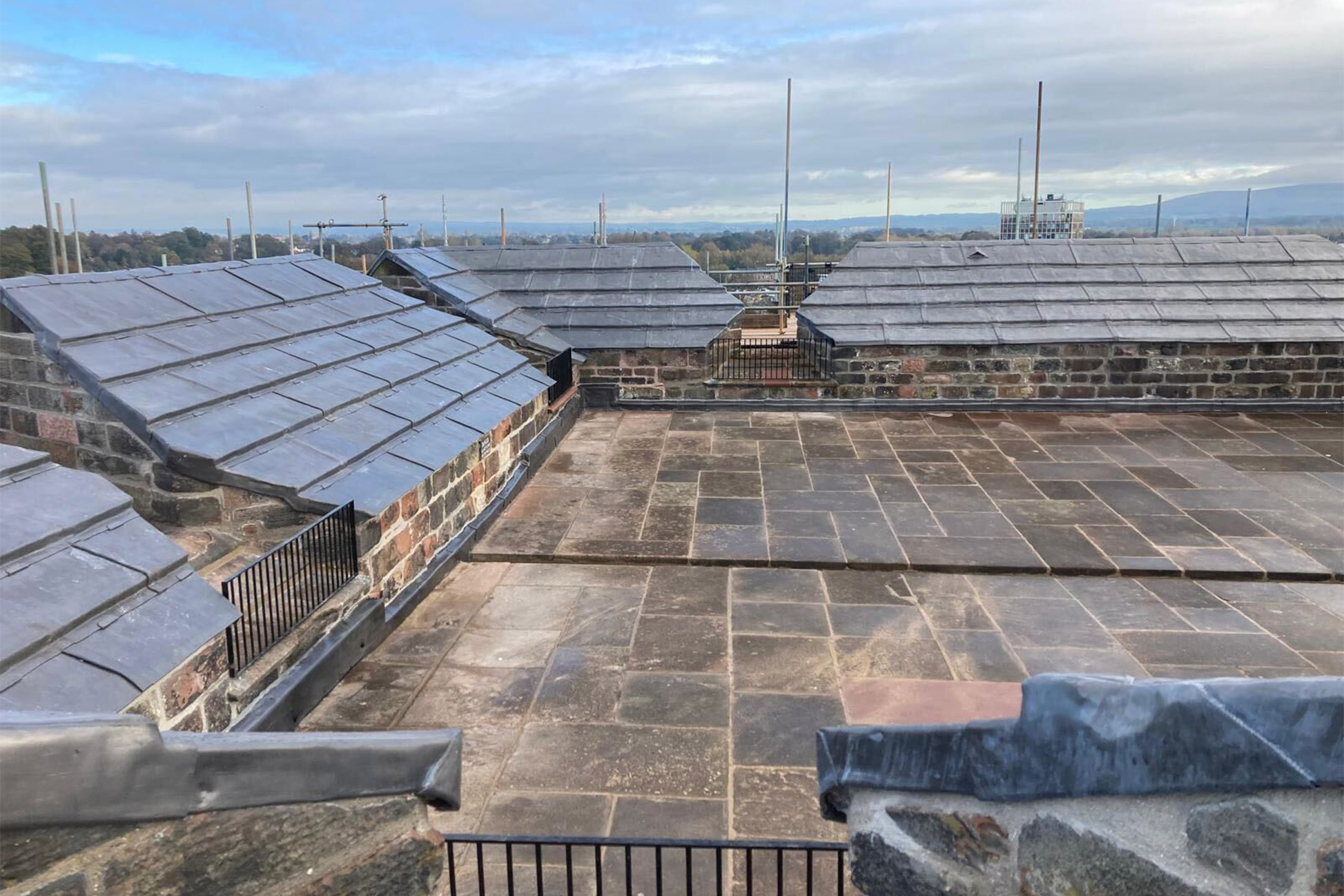
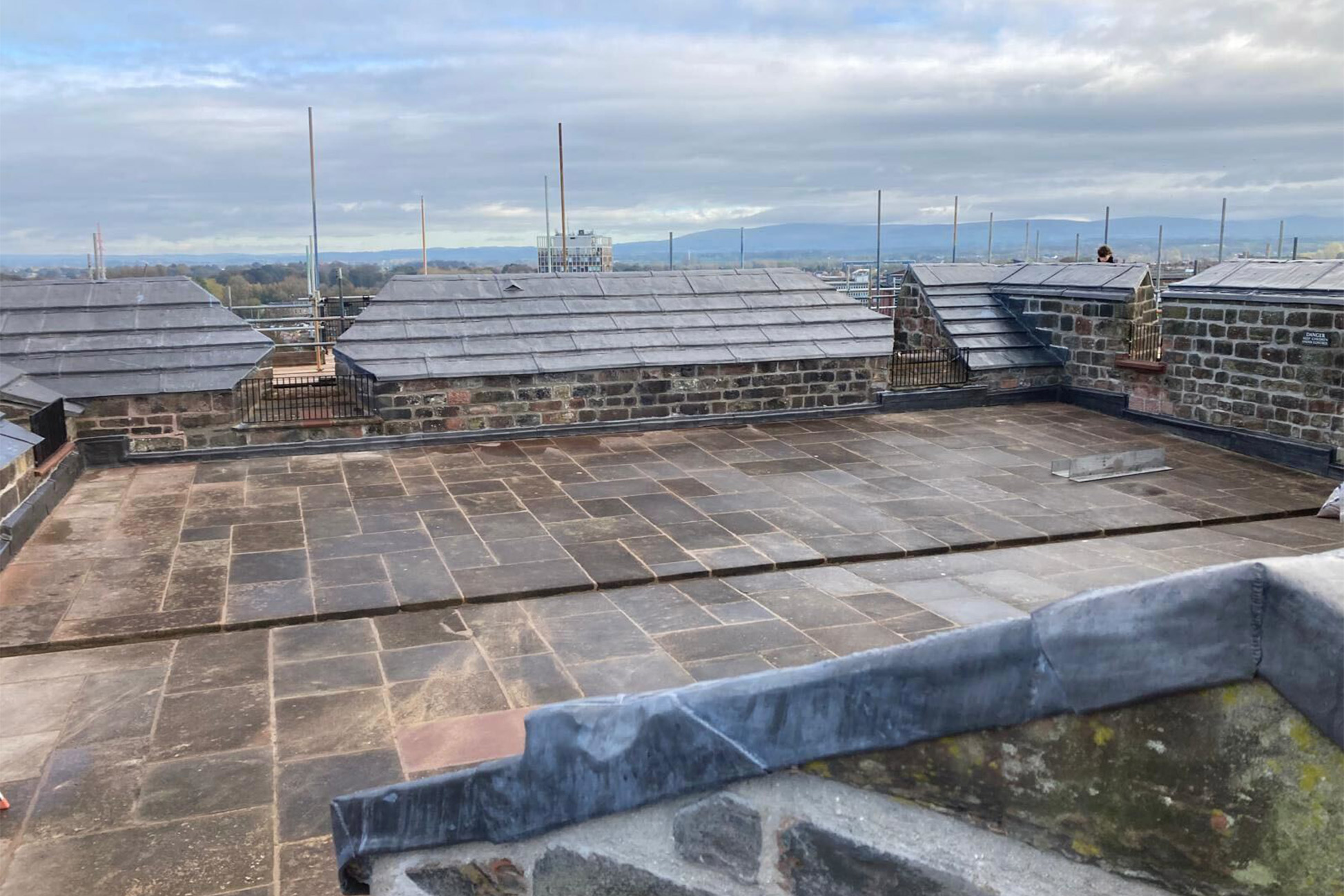
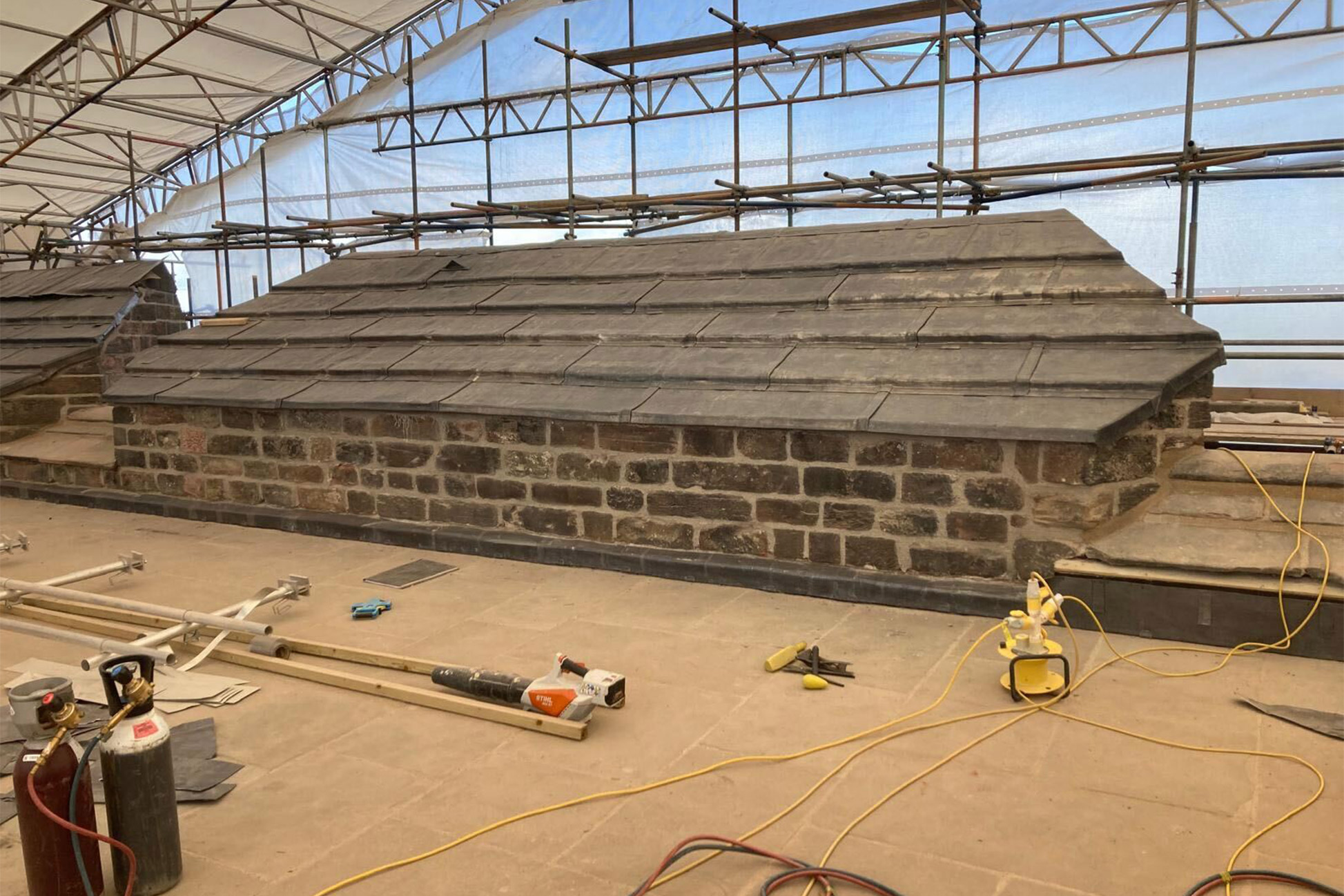
The parapet wall was of substantial construction, measuring approximately 10 feet in thickness, with a four-tier stepped stone surface falling towards the interior stone roof. The original proposal was to dismantle the stonework and relay it using new lime mortar. However, once inspected more closely, the condition of the existing stone proved too fragile for this approach to be viable.
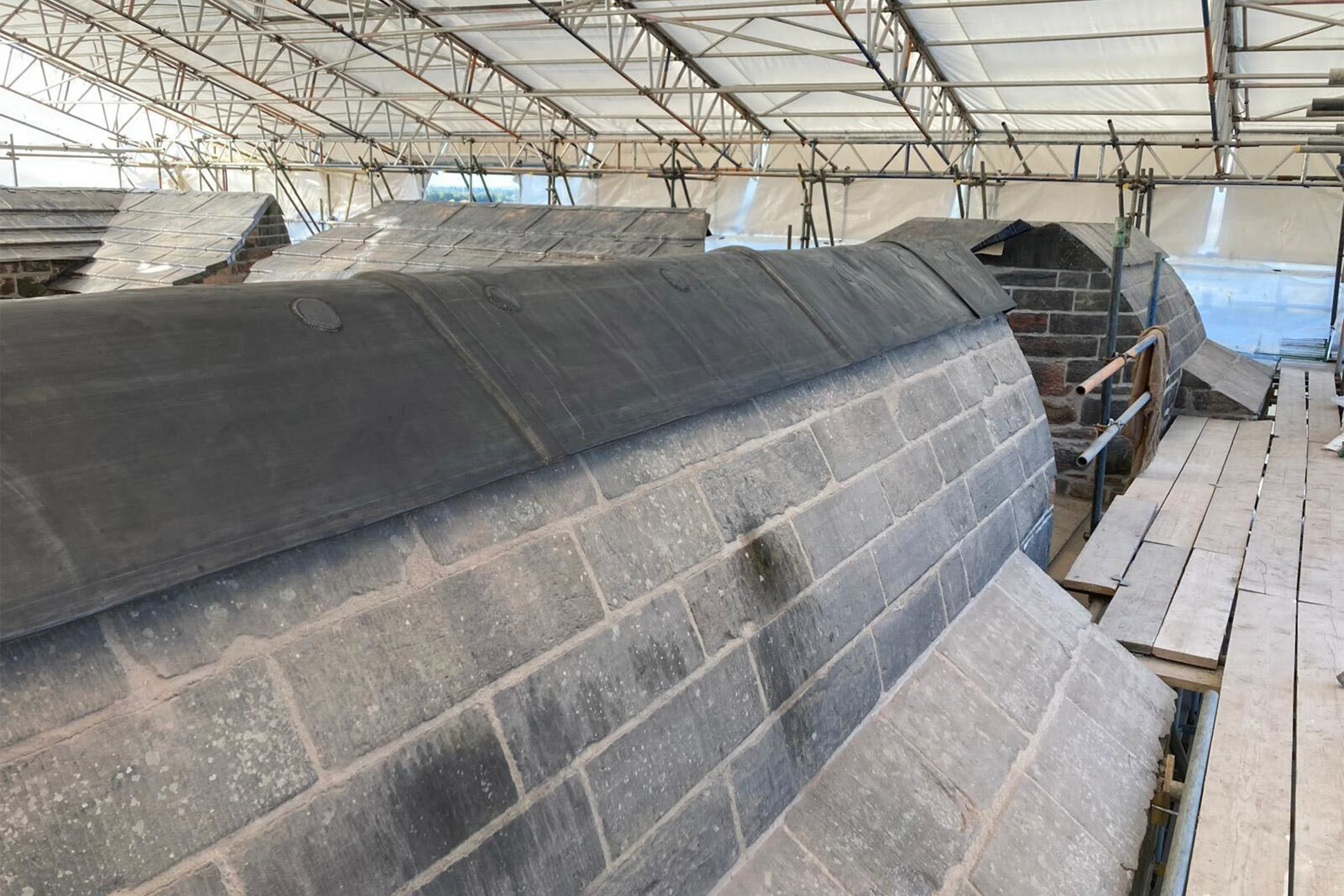
As an alternative, it was agreed that the parapet would be made fully watertight using traditional sheet lead detailing, introduced discreetly to protect the structure while respecting the historic masonry.
Code 6 lead was installed using a welted system. All exposed edges and terminations within the parapet wall were further secured using Code 7 lead clips, providing additional strength and longevity. To prevent corrosion, all leadwork was laid over Grade 1 building paper.
The work was both physically demanding and technically complex, requiring precision across a large expanse of heavy stonework and lead. Despite the intensity of the project, it was highly rewarding to see the parapet fully protected and performing as intended.
The project was completed in November 2022, just ahead of deteriorating winter weather, ensuring the keep was safeguarded against further water ingress and preserved for years to come.
Case Studies