
Copyright © Lumley Leadwork & Roofing 2025 | Designed by Studio Inter
Copyright © Lumley Leadwork & Roofing 2025 | Designed by Studio Inter

Overview
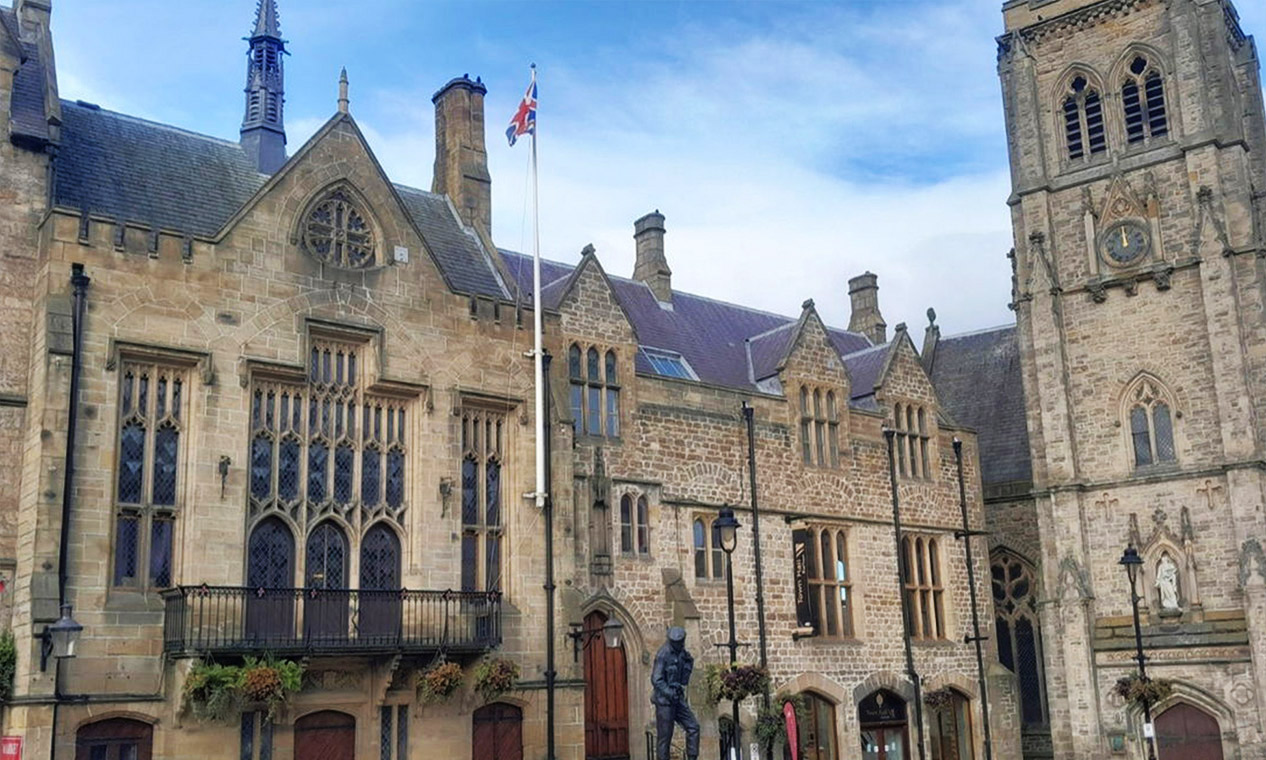
Constructed in 1665, Durham Town Hall sits at the heart of the city’s historic core and has played a central role in civic life for centuries. In Autumn 2021, we were called out to inspect the building’s distinctive lead-clad ventilation tower, which rises through the vaulted ceiling of the main hall and forms a recognisable element of the city’s skyline. The tower was found to be in an unstable condition and at risk of collapse if left unaddressed. Ongoing water ingress had led to the decay of key structural timbers, requiring urgent and carefully considered conservation intervention. Our role was to dismantle, stabilise and restore the tower using traditional leadworking techniques, while preserving its historic fabric and character.
Results
The existing lead cladding was carefully dismantled, revealing the full extent of the structural issues beneath. In total, 276 individual pieces of lead were removed, ranging in size from 60mm to 500mm. Each piece was meticulously set aside and retained so accurate templates could be produced for reinstatement.
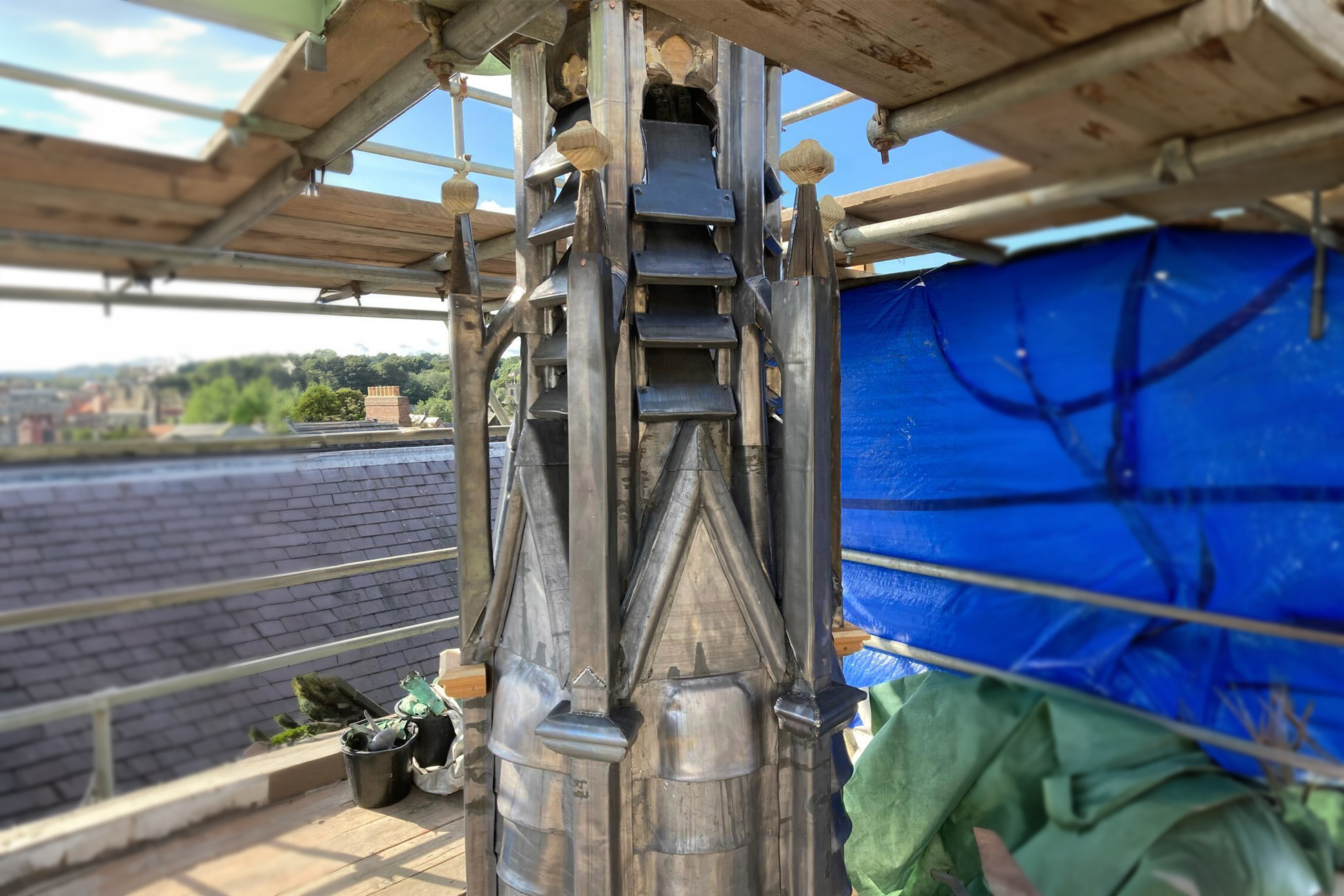
Works paused while a specialist team of carpenters designed and installed a system to permanently stabilise the tower. A galvanised steel lattice frame was introduced internally to prevent further movement, while the external timber structure was repaired and restored to provide a secure substrate for the lead cladding. Where possible, original timbers unaffected by water ingress were retained and reused.
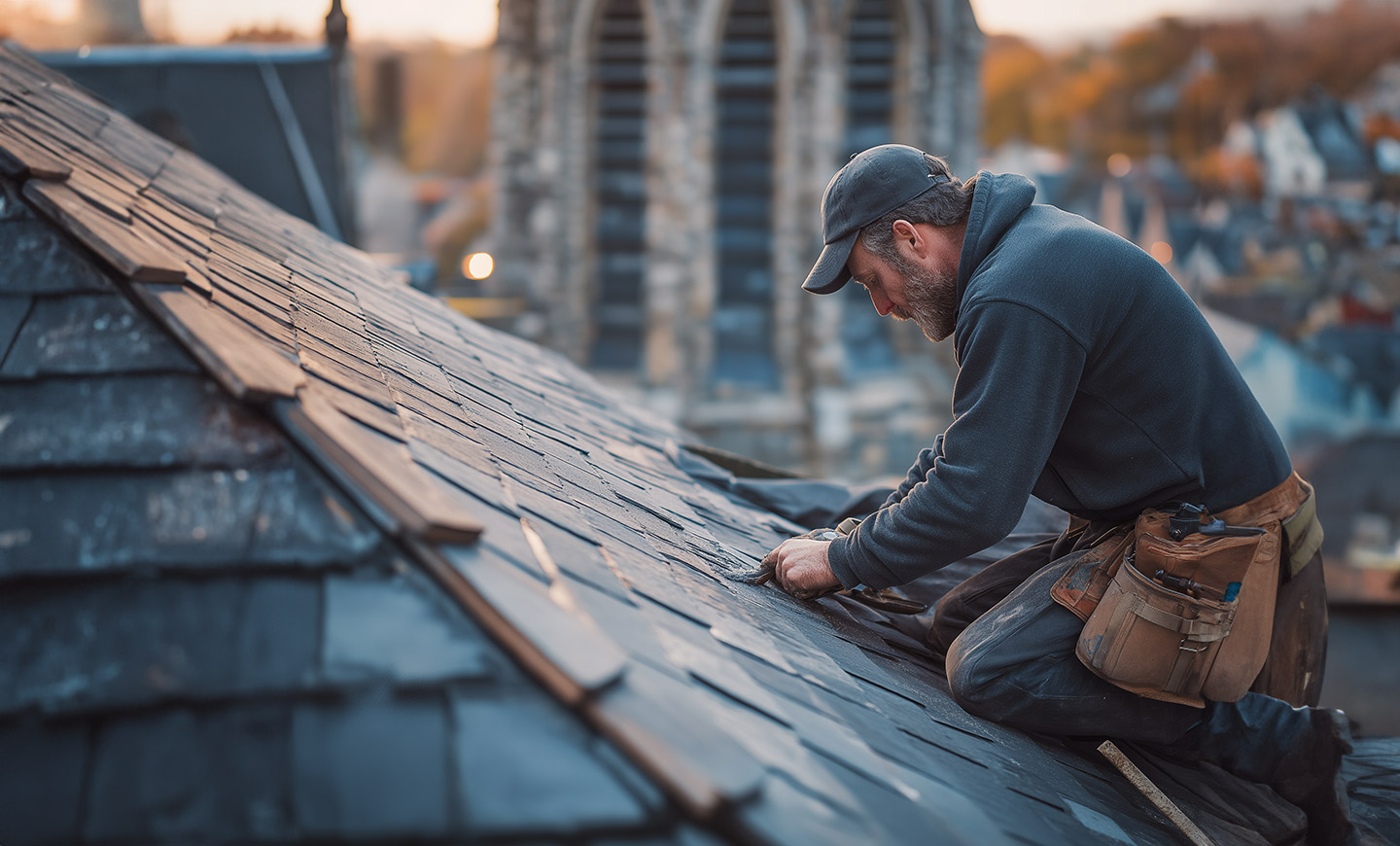
Once stabilisation works were complete, lead installation commenced. Each element was cut and formed by hand, using templates taken directly from the original fabric. Traditional bossing and lead welding techniques were employed throughout to replicate the historic detailing and ensure longevity.
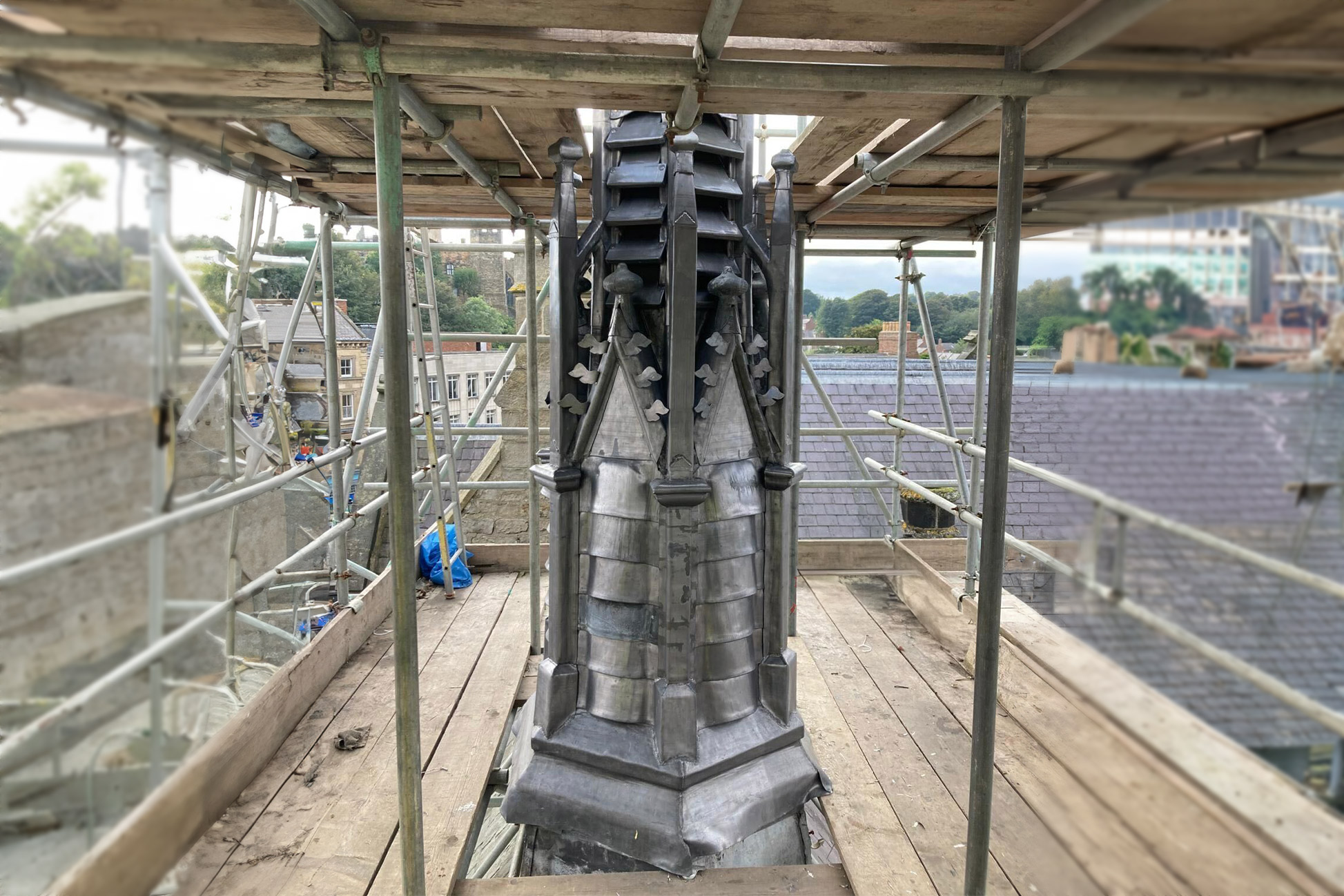
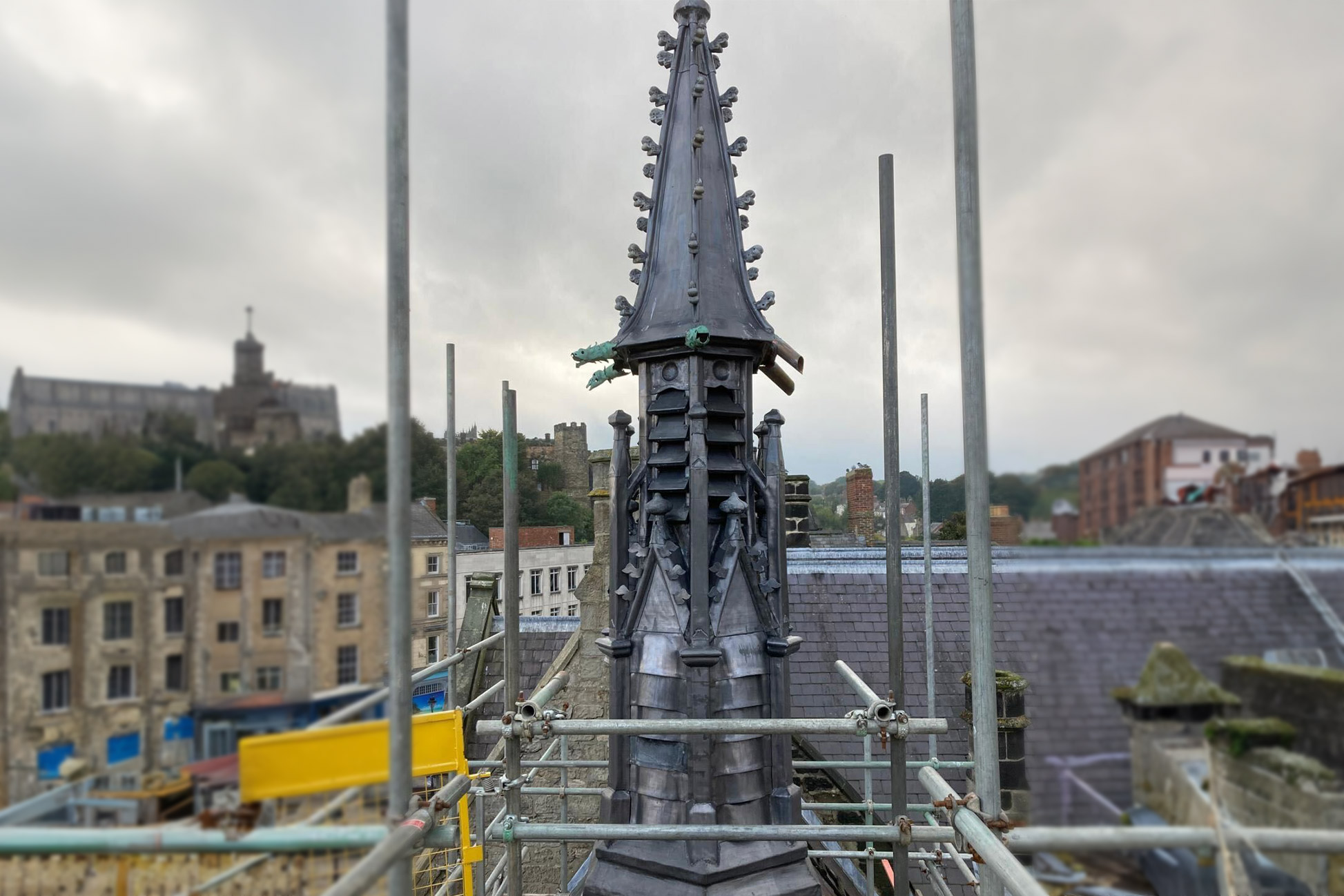
The tower itself is hexagonal in plan and approximately 5 metres in height, comprising two ventilated sections, a distinctive witch’s hat–shaped roof, and a clad section below. During works, historic graffiti was uncovered on the lower vents. Following guidance from the conservation officer, this graffiti believed to date back to repairs carried out in the previous century was carefully preserved and reinstated as part of the tower’s story.
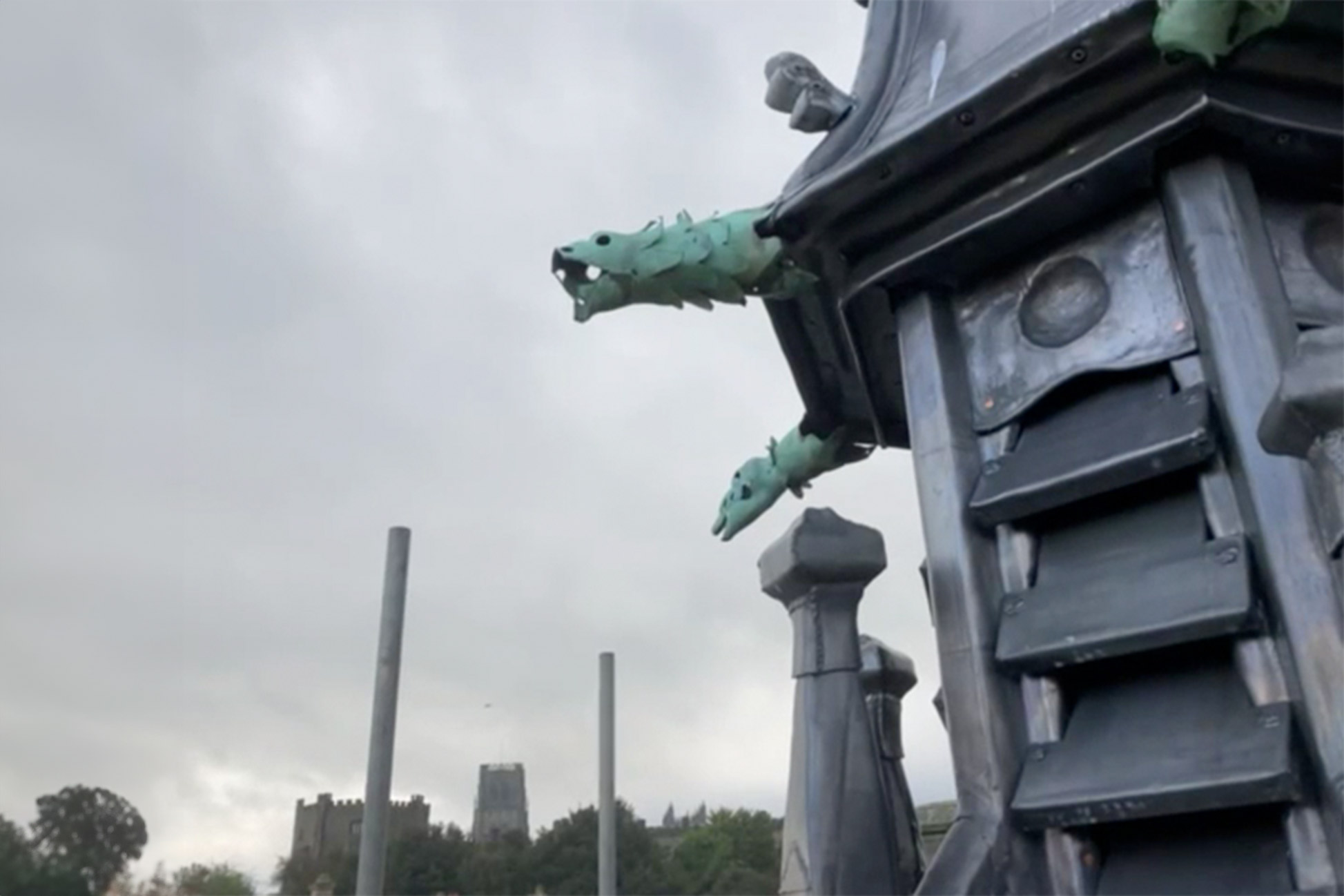
Decorative lead mouldings to the roof were temporarily removed, cleaned, and re-welded back into place. Four copper spitters located at the base of the roof were also conserved and mechanically fixed, complete with waterproof lead capping to ensure effective rainwater discharge.
This was a highly unusual and characterful project, featuring a form and level of craftsmanship rarely encountered today. The tower appears in countless historic images of Durham, and it is a source of great pride for us to have played a part in safeguarding such a distinctive element of the city’s architectural heritage.
Case Studies