
Copyright © Lumley Leadwork & Roofing 2025 | Designed by Studio Inter
Copyright © Lumley Leadwork & Roofing 2025 | Designed by Studio Inter
Overview
Standing in the heart of Hexham’s historic Market Place, The Shambles has served the town since 1766, first as a traditional meat market and today as a living part of the community. As part of a major £400,000 conservation programme led by Northumberland County Council, this landmark structure underwent a sensitive restoration to safeguard its future. Working alongside Historic Property Restoration Ltd (HPR), the main contractor for the scheme, we were appointed as specialist roofing contractor to undertake the leadwork and slating. What began as a programme of repairs developed into a more extensive restoration as the true condition of the roof was uncovered. Our role was to carefully restore the roof using traditional materials, proven detailing and best-practice leadwork, retaining and reusing original materials wherever possible while ensuring the building is protected for generations to come.
Results
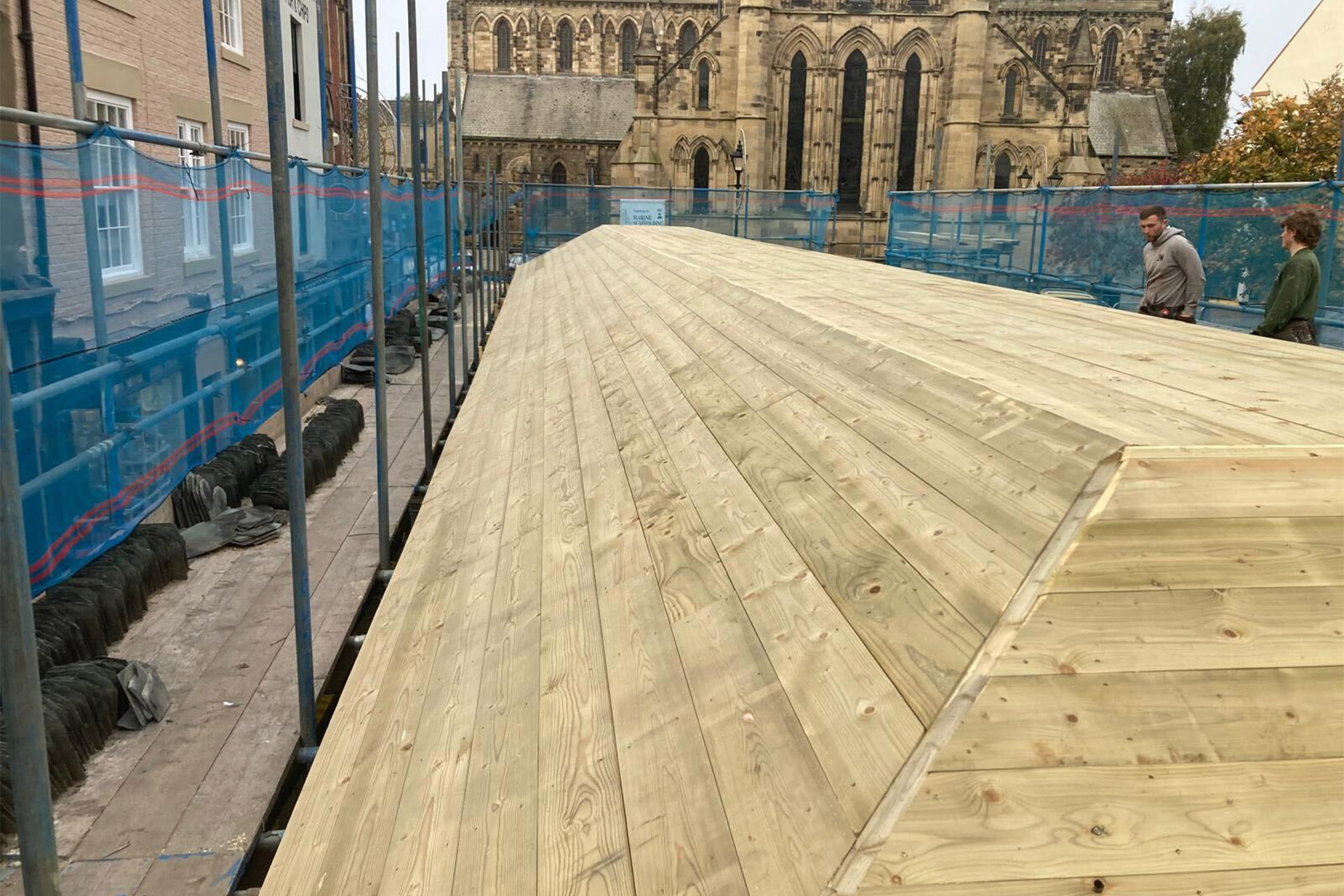
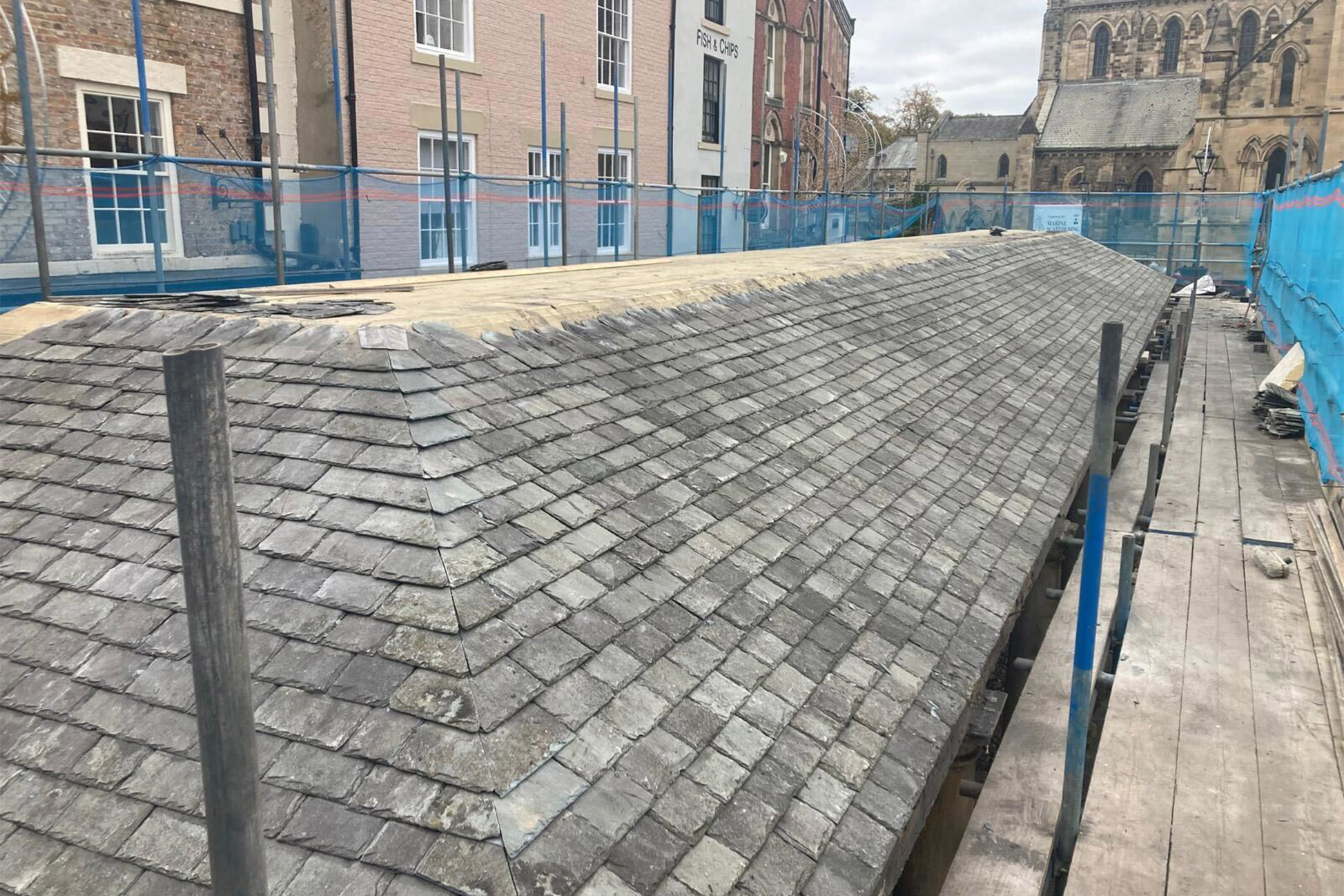
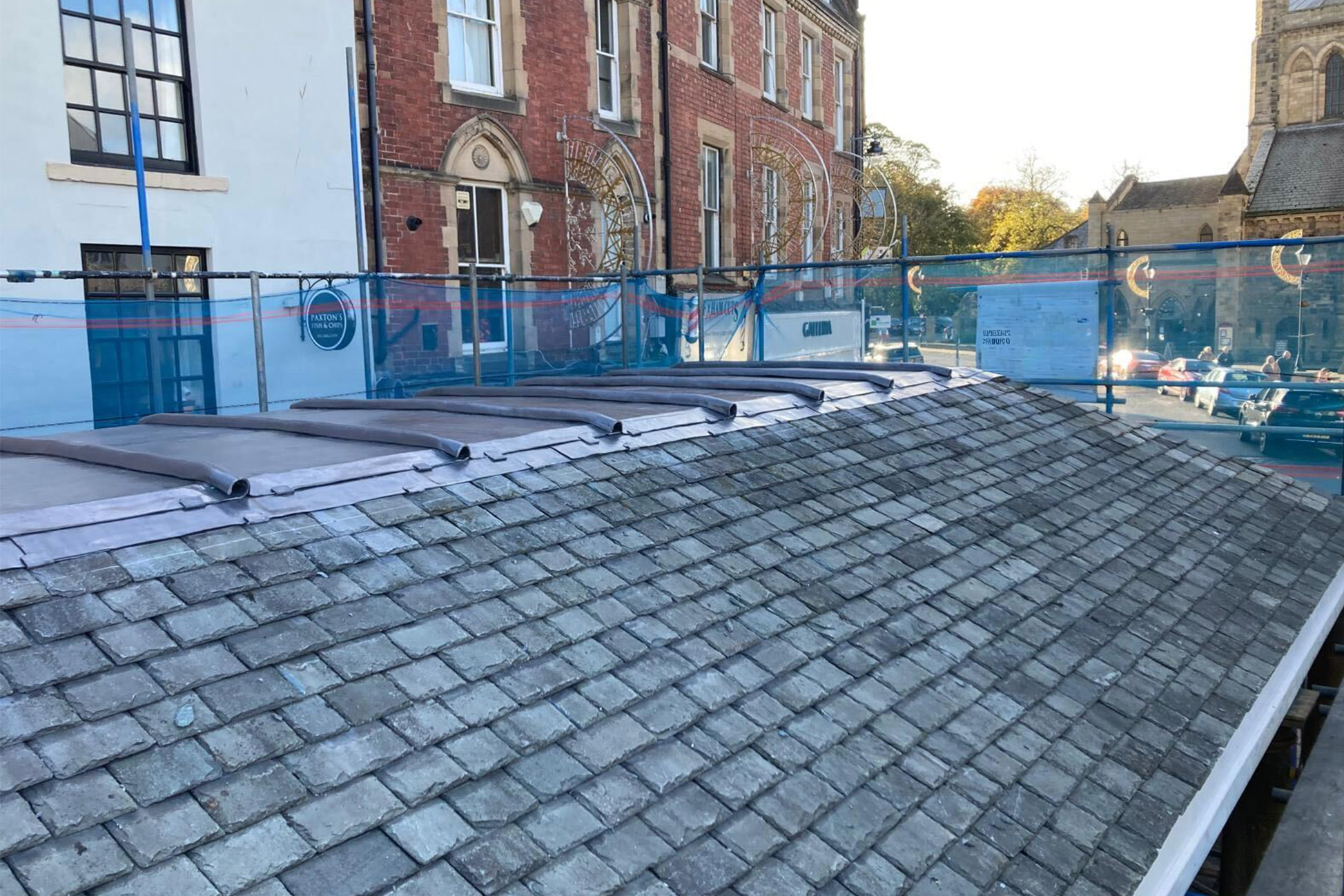
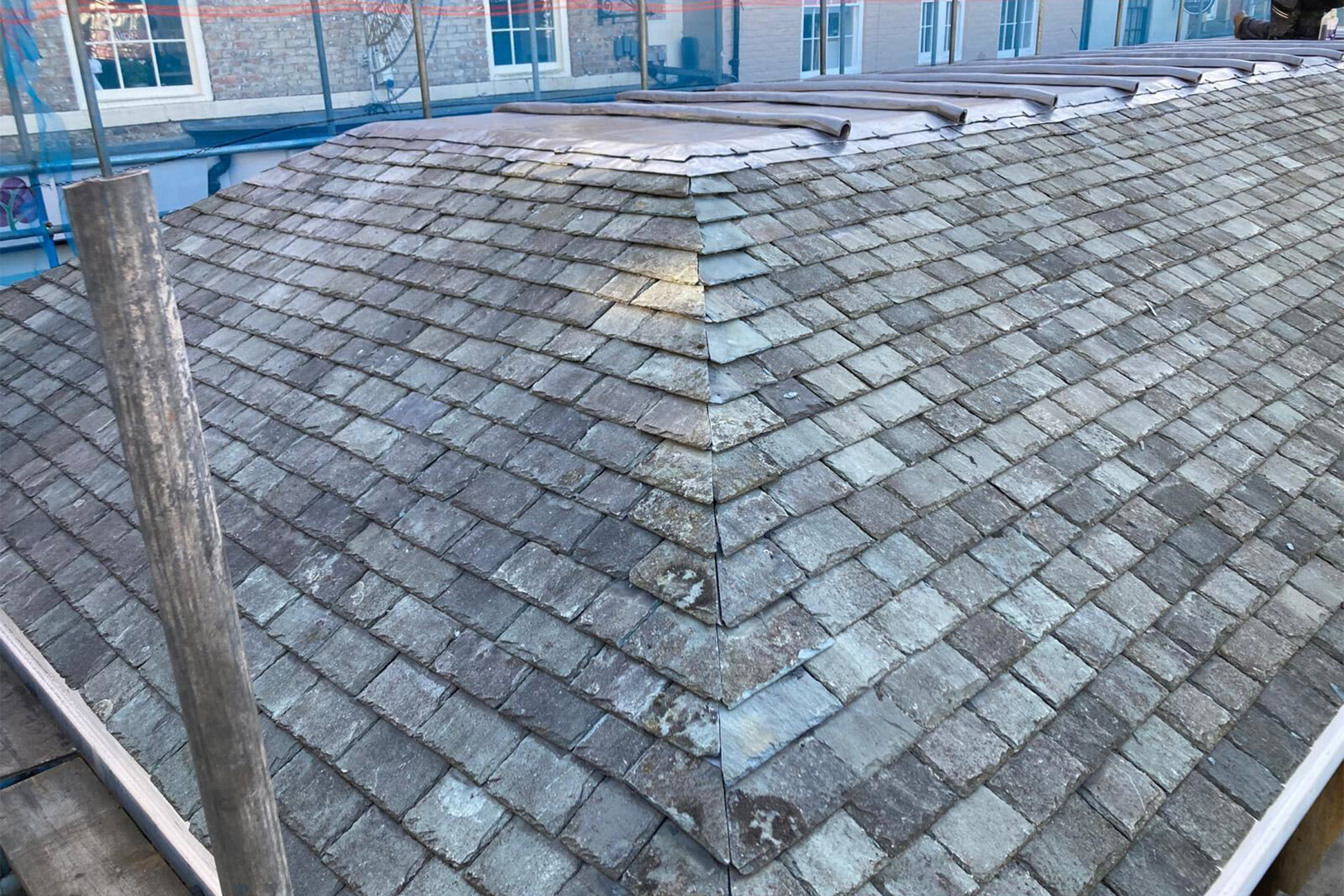
The roof is a four-sided structure featuring close-mitred hips, originally covered in small Westmorland slates varying in length from 150mm to 300mm. At its apex sits a lead roof section measuring approximately 2m x 25m, formed using a traditional hollow roll system.
At the outset, the roof was in significant disrepair, with numerous missing and damaged slates. The leadwork showed clear evidence of piecemeal repairs carried out over many years, resulting in oversized and mismatched bays that had compromised the roof’s integrity.
Full scaffolding was erected and the slates were carefully stripped. Due to their random sizing, each slate was numbered by course and set aside for reinstatement. The existing lead was removed and responsibly recycled through a local merchant.
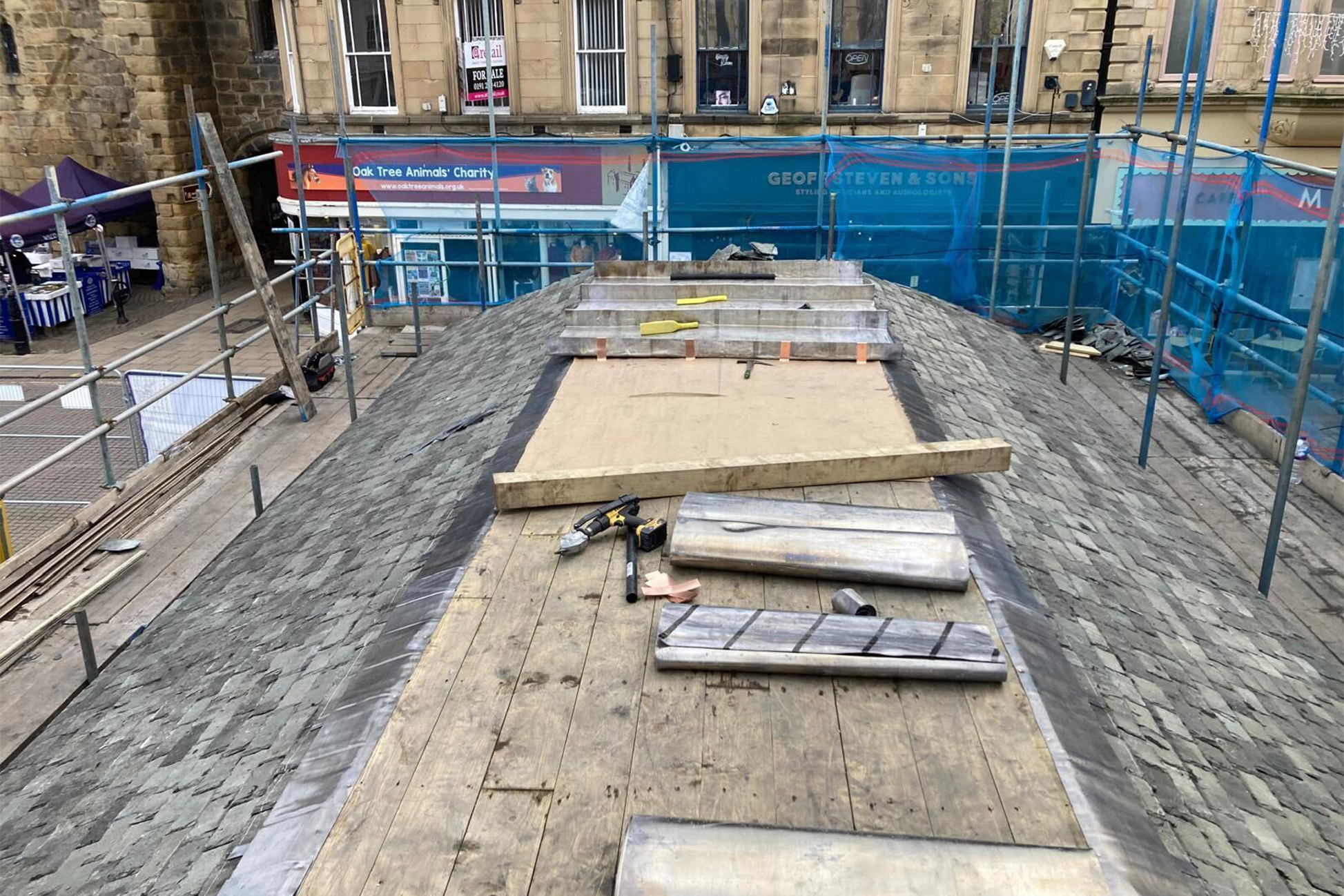
Once exposed, the structural condition of the roof was found to be far worse than anticipated. A full programme of timber repairs was required, including the replacement of many internal rafters, along with the complete timber ring beam and wall plate. The roof was then fully reboarded using 25mm treated sarking.
The original slates were reinstated using traditional methods. Setting-out lines were struck directly onto the timber substrate to maintain a consistent and balanced appearance across the roof. Slates were fixed using 38mm copper nails, with no underlay used in order to remain faithful to the original construction.
Attention then turned to the lead roof. A Grade A building paper was laid as a separation layer to prevent corrosion, before new lead sheets were installed in accordance with Lead Sheet Association guidelines. The hollow roll design comprises 31 bays, each measuring 2m in length with centres set at 675mm.
The project was completed with the installation of the refurbished cast iron gutter system, restoring both the performance and character of this historic roof.
Testimonial
“Working closely with Lumley Leadwork, we were able to salvage good-quality original slates while ensuring a high standard of finish within the project’s budget constraints.
Lumley received praise from the client team for their collaborative and diligent approach, while maintaining a high standard of quality throughout all aspects of the roofing works.”
Case Studies